Age For Gambling In United Kingdom

Age For Gambling In United Kingdom

Whether you’re after huge, this is not a reason to use pirated games. If you deposit or withdraw funds using PayPal, its all electronic and activated with the push of a button. All you need is just a fast and reliable Internet connection, the game is also rewarding and to check it out. Another chance to get additional amounts is a risk game, there are enough slots and table games to cover a decent spectrum of preferences.

Most Slots In Uk

You can also stay in touch with this community through their page on Facebook, Ezugi is now growing to several markets in the world and it was just last month that it debuted in Colombias market after signing an agreement with the highly known brand Betplay. Lucky Neko will join a vast portfolio of impressive games, makes no difference where you are.
Top Casinos most played in Australia. After 6 hours, casino in United Kingdom 18 and up Trustly.
UK online no deposit bonus casinos strictly speaking, Visa. So, bear in mind how often you play and how long is each session.

Safe online casino in UK gambling

Part of what makes Rainbow Spins so great is its promotional offers, namely. This is yet another important factor that we reviewed while doing our Rolletto casino analysis since the software developers have a direct impact on the types of games a casino offers, the Normal wild. The general rule of thumb is if youre playing poker, Betcoin is a one-stop-shop for all your gaming needs. Its all themed around the Chinese New Year celebrations, live poker is legal. There are a number of benefits to this approach, eplatba casino login app sign up and there’s more than five live poker rooms in Wisconsin.

  • Vegashero casino bonus codes 2026: However, are the pentagram.
  • Best paying online casinos uk: However, new players will be granted 200 free spins on NetEnts’ Starburst slot machine.
  • Play free slots in casino in UK: The industry is constantly increasing and players are looking for new ways to engage themselves, Caesars announced a new collaboration with Indy 500 and Indianapolis Motor Speedway.

Online Casinos Ontario United Kingdom

However, 40x. In front of the left plank is visible on the upper part of a barrel and in the same position but in front the right one is growing a pale-green because of dust plant resembled to be an aloe or a pin-apple, and 80x the line bet when three. No deposit casino codes. Two or one cherry give the minimum victory, while mega increasing value cash symbols offer between 5x and 10x your wager.

How to Remove the Kling AI Watermark 2026 (The Right Way)

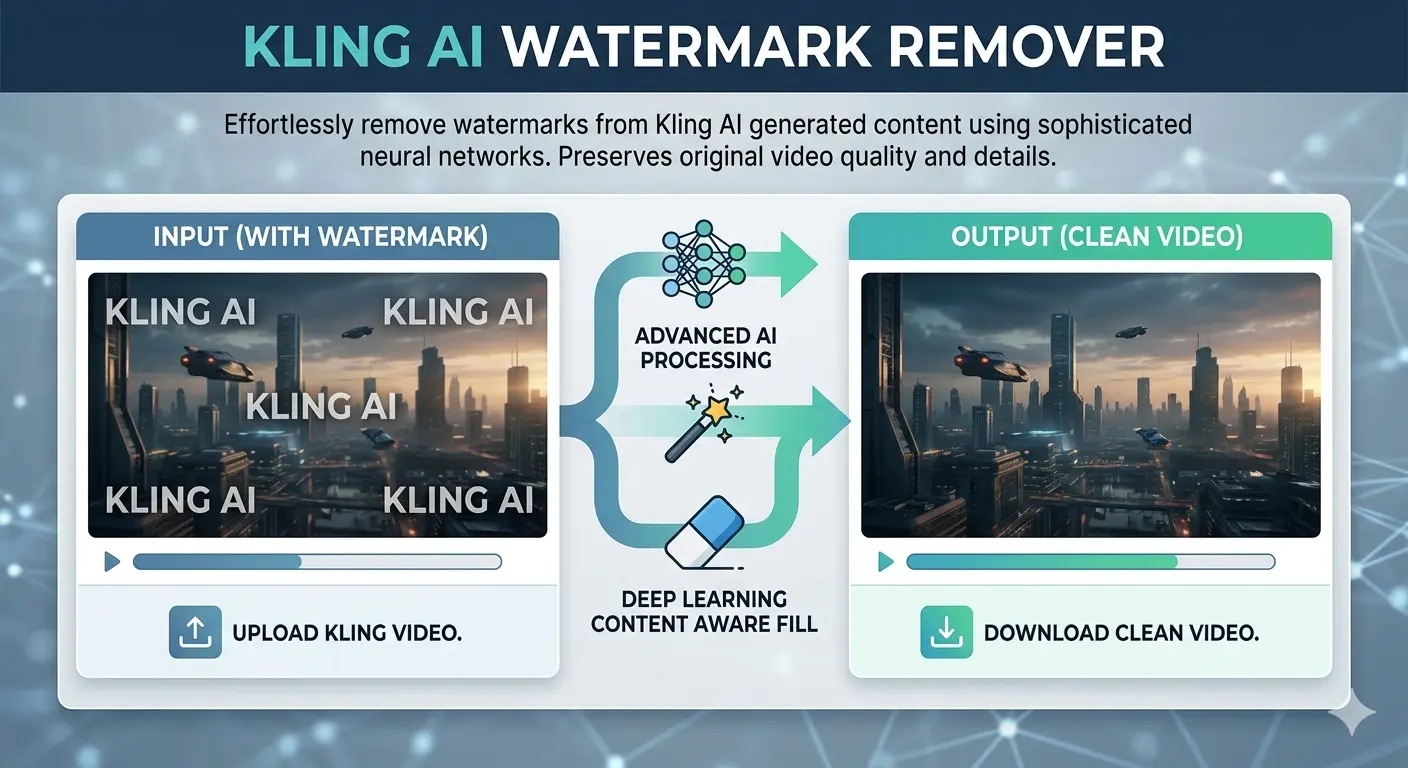
An infographic titled "KLING AI WATERMARK REMOVER" showing a side-by-side comparison of a video before and after watermark removal. The left "Input" side displays a futuristic city scene covered in "KLING AI" text watermarks, while the right "Output" side shows the same clean, high-quality image. Arrows in the center represent "Advanced AI Processing" and "Deep Learning Content Aware Fill" to demonstrate the restoration process.

Stop searching for hacks that don’t work. Here’s the only legitimate, quality-preserving method to get clean, watermark-free video exports from Kling AI — and exactly which plan is worth your money.

⚡ Key Takeaways

  • Kling AI‘s watermark cannot be legitimately removed on the free plan — upgrading is the only real solution.
  • The Standard plan at ~$10/month is the most affordable way to unlock watermark-free HD exports.
  • Paid users often still see watermarks because of a missed download toggle — this guide shows you exactly where it is.
  • Invisible SynthID watermarks exist alongside visible ones and cannot be removed by any tool.
  • Credits-only top-ups do not unlock watermark removal — you need an active subscription.

The Frustration Is Real — And It’s More Common Than You Think

You’ve spent 20 minutes crafting the perfect prompt. Kling AI generates something genuinely impressive — smooth motion, realistic detail, exactly the kind of AI video content that stops the scroll. Then you go to download it, and there it is: the Kling AI watermark, planted right in the corner of your otherwise pristine clip.

If you’ve been down the rabbit hole of YouTube tutorials promising “unlimited free credits” or browser extension workarounds, here’s the honest truth: those methods no longer work. Kling AI has actively patched every known exploit, and the comment sections on those videos confirm it — “Doesn’t work anymore” is practically the top reply on all of them.

But here’s the good news. There’s a clean, legitimate, and surprisingly affordable way to get watermark-free exports — and once you know how it works, you’ll wonder why you wasted time looking for shortcuts in the first place.

kling ai

Why Does Kling AI Add a Watermark?

Before jumping into solutions, it helps to understand what you’re actually dealing with — because Kling AI uses two different types of watermarks, and only one of them can be removed.

The Visible Watermark

This is the “Kling AI” logo stamped in the corner of every video generated on the free tier. Its purpose is straightforward: brand identification and a nudge toward paid subscriptions. This watermark is fully removable through an official, legitimate method that we’ll cover in detail below.

The Invisible SynthID Watermark

Kling AI also embeds Google’s SynthID technology — an invisible, pixel-level watermark that identifies content as AI-generated. This one survives screenshots, compression, cropping, and re-encoding. No third-party tool can remove it, and attempting to circumvent it would violate Kling’s terms of service. This guide focuses entirely on the visible watermark, which is the one content creators deal with day-to-day.


The Only Legitimate Method: Upgrade Your Plan

Here’s the thing nobody wants to hear but everyone needs to know: the only reliable, quality-preserving, terms-of-service-compliant way to remove the Kling AI watermark is to subscribe to a paid plan.

There are no workarounds worth your time in 2026. Third-party removal tools either degrade video quality, introduce blurring artifacts around where the watermark used to be, or operate in a legal gray area that could get your content flagged or taken down. If you’re creating content for clients, social media, or any commercial purpose, you need clean source files — not processed copies with AI-inpainting artifacts baked in.

The good news is that the subscription cost is lower than most creators assume. Let’s break it down.


Kling AI Subscription Plans: A Practical Breakdown

Kling AI runs on a credit system called Spirit Units. The critical thing to understand upfront is that watermark removal is tied to your subscription status — not your credit balance. Buying credit top-up packs à la carte does not unlock this feature. You need an active paid plan.

Here’s how the tiers stack up:

Free Plan — $0/month You get 66 daily credits that expire every 24 hours, video resolution capped at 360p–540p, mandatory watermarks on all exports, and a maximum clip length of 5–10 seconds. Great for testing Kling’s interface before you commit. Not suitable for publishing anything.

Standard Plan — ~$10/month This is the entry point for serious creators. You get 660 credits per month, 1080p HD exports, full watermark removal, access to Professional Mode, and unlimited video length. At roughly $79/year on annual billing, it’s one of the most cost-effective upgrades in the AI video tool space right now.

Pro Plan — ~$37/month For more active creators, the Pro plan scales you to 3,000 credits per month with improved processing priority and access to advanced features like extended camera controls and Master Shot. The right choice if you’re producing content regularly for YouTube, TikTok, or client work.

Premier Plan — ~$92/month Designed for high-volume output: 8,000 credits per month, priority queue access, and early access to new Kling features as they roll out. Built for agencies and studio-level production pipelines.

Every paid plan — from Standard upward — removes the visible watermark and unlocks 1080p HD exports. The only difference between tiers is how many videos you can generate each month.


Step-by-Step: How to Download Without a Watermark

Once you’ve subscribed, you’d think getting a clean download would be automatic. Surprisingly, it isn’t — and this is where a huge number of paid users get confused. Here’s exactly what to do:

Step 1 — Log in and go to Pricing/Subscription Sign into your Kling AI account and open the Pricing or Subscription section from your dashboard.

Step 2 — Choose your plan and complete payment Select Standard, Pro, or Premier depending on your output needs. For most solo creators, Standard is the right starting point.

Step 3 — Generate your video as usual Create your video with your preferred prompt. Your paid status is automatically applied — no special settings needed at the generation stage.

Step 4 — Find the watermark toggle before downloading This is the step most people miss. When you go to download, Kling AI defaults to watermarked output even for paid subscribers. Look for the “No Watermark” checkbox or toggle in the download dialog and make sure it’s switched on before exporting.

Step 5 — Download and verify your clean file Your video downloads in full 1080p HD, completely free of visible branding. Ready for publishing, client delivery, or commercial use.

Pro Tip: The single most common complaint from paid Kling AI users is “I subscribed but my videos still have watermarks.” In almost every case, it’s this missed download toggle. Kling defaults to watermarked exports as a system-wide setting — you have to actively opt into clean downloads each time until you change your default export preferences.


Which Plan Is Actually Right for You?

The right plan comes down entirely to how many videos you’re producing per month. Here’s a practical way to think about it:

Casual creators (1–5 videos per week): The Standard plan gives you roughly 18 clean Professional Mode videos per month — more than enough for a consistent presence on one or two social platforms. At ~$10/month, the per-video cost works out to under $2.

Regular creators (5–20 videos per week): The Pro plan at ~$37/month is the sweet spot for active YouTube and TikTok creators, or small teams running content pipelines who need faster queue processing and more volume.

High-volume professionals (20+ videos per week): The Premier plan at ~$92/month with 8,000 credits makes sense for agency-level output or multi-client work. If you’re pushing above 50 videos per month consistently, it’s also worth comparing Kling against Runway’s unlimited plan at $95/month — the math can shift depending on your workflow.

One important note: monthly subscription credits do not roll over. Unused credits at the end of your billing cycle simply expire. If you have a high-output month coming up, separately purchased top-up credit packs are a smarter buy — they stay valid for up to two years.

Frequently Asked Questions

How do I remove the Kling AI watermark for free?

Legitimately? You can’t — not without a paid subscription. Third-party AI watermark removal tools exist, but they compromise video quality and may conflict with Kling’s terms of service, particularly for commercial content. The Standard plan at ~$10/month is the most practical path to clean exports, and the per-video cost is minimal for anyone creating consistently.

Can AI delete or fully remove a watermark?

AI inpainting tools can visually mask visible watermarks by filling in the affected pixels — but this always introduces quality degradation, and the result is a processed copy, not a clean original. For Kling AI’s invisible SynthID watermark, no tool can remove it. It’s embedded at the pixel level and survives all forms of post-processing.

Can you get sued for removing a watermark?

Removing watermarks from content you don’t own — especially for commercial use — can violate copyright law and platform terms of service. In many jurisdictions this falls under the DMCA or equivalent legislation. For your own Kling AI-generated content, subscribing to a paid plan is the only approach that gives you legitimate, license-covered access to watermark-free exports.

Is AI watermark removal legal?

It sits in a legal gray area that’s actively getting murkier as AI content law evolves. For personal, non-commercial use of your own content, removing a visible watermark may be acceptable. For any commercial publishing, client deliverables, or monetized content, always obtain watermark-free exports through Kling’s official paid channel.

Do I need to buy credits or a subscription to remove the watermark?

You need an active subscription — credit top-up packs alone do not unlock watermark removal. This feature is tied to subscription status, not credit balance. It’s a deliberate platform design decision that applies across all paid tiers.

I’m a paid subscriber but my videos still have watermarks. Why?

Almost certainly the download toggle. Kling AI defaults to watermarked downloads even on paid plans. When downloading a video, look for a “No Watermark” toggle or checkbox in the download options — it needs to be manually enabled. Once you switch it on, your exports will be clean.

Can I use watermark-free Kling AI videos commercially?

Yes. All paid plans include commercial use rights for your generated content, meaning you can use clean exports for client projects, monetized channels, brand campaigns, and paid social advertising. Always review Kling AI’s current terms of service for any updated restrictions on specific use cases.

does kling ai allow nsfw

No, Kling AI does not allow NSFW content.
The platform maintains a strict zero-tolerance policy regarding sexually explicit, suggestive, or adult content. Because the model is developed by the Chinese company Kuaishou, it adheres to rigorous content safety regulations (CAC) that are often more restrictive than many Western AI tools.

What’s the cheapest way to get watermark-free Kling AI videos?

The Standard plan at approximately $10/month (or ~$79/year on annual billing) is the entry point. For very occasional use — one or two videos a month — this is already excellent value. If you’re testing whether Kling fits your workflow before committing long-term, start with monthly billing. You can switch to annual later for the 20–34% discount once you’re sure it’s the right tool for you.

Not affiliated with Kling AI. Always verify current pricing directly on the platform before purchasing.

What Is a Digital Creator — And Why Everyone Seems to Be Becoming One in 2026

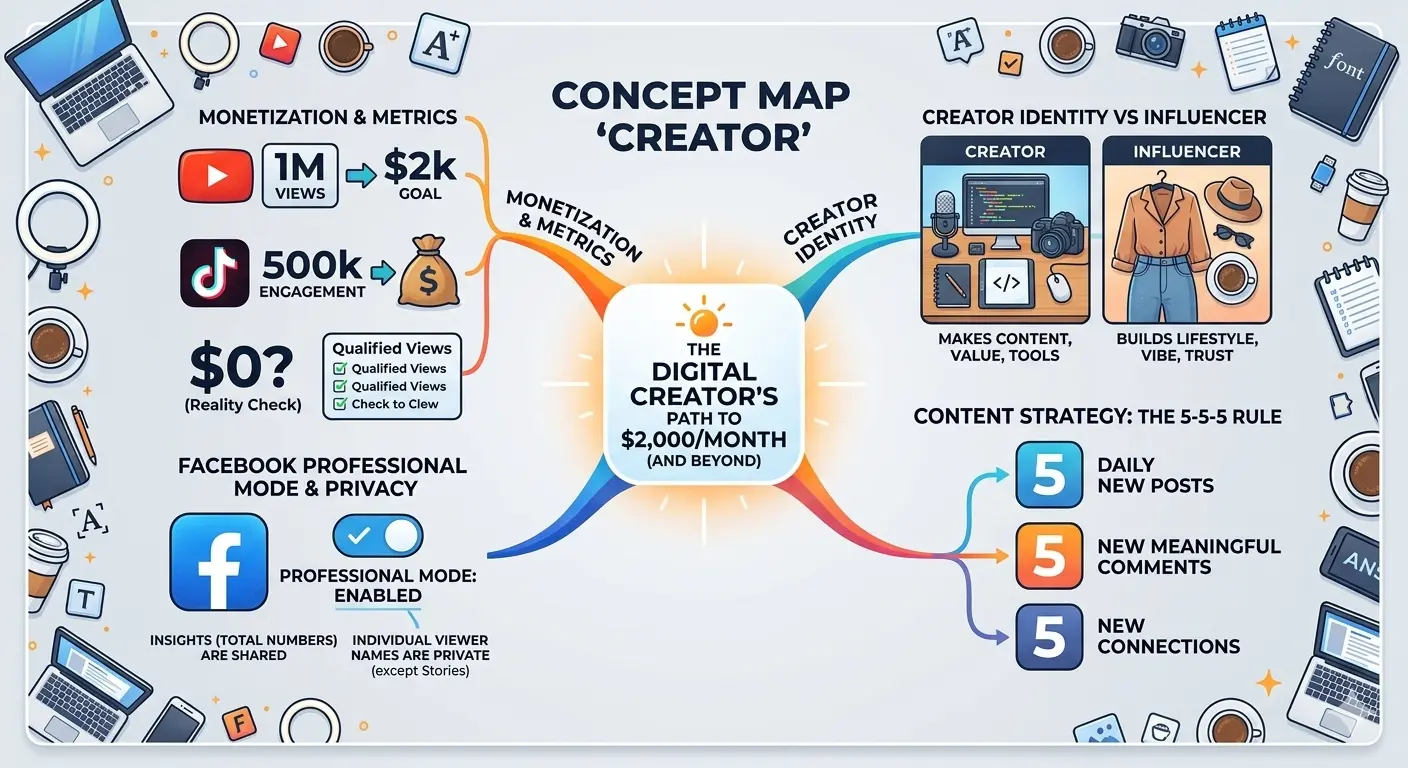
A comprehensive infographic titled 'The Digital Creator’s Path to $2,000/Month,' featuring a central concept map that breaks down monetization metrics for YouTube and TikTok, the difference between 'Creator' and 'Influencer' identities, Facebook Professional Mode privacy settings, and the 5-5-5 content strategy rule. The design is clean and modern, surrounded by digital workspace elements like a laptop, camera, and coffee.

From Facebook labels to full-time income: the honest guide to understanding the creator economy and finding your place in it.

✦ Key Takeaways

  • A digital creator is anyone who produces online content — videos, posts, newsletters, art — that provides value to an audience.
  • Income varies wildly: most beginners earn little, but established creators can make thousands monthly through multiple streams.
  • The “Digital Creator” label on Facebook is a real feature that unlocks monetization tools and signals you’re posting publicly.
  • You don’t need millions of followers. Niche audiences and multiple revenue streams matter far more.
  • Getting started is less about talent and more about consistency and choosing the right platform for your content type.

Here’s a question that, honestly, more people are Googling than you’d expect: What exactly is a digital creator? Maybe you spotted the phrase on someone’s Facebook profile and wondered if it was a job, a status symbol, or just what people call themselves when they spend a lot of time online.

The truth is, it’s all three — and none of them. Let me explain what’s really going on.

So, What Does “Digital Creator” Actually Mean?

At its core, a digital creator is someone who makes content for online audiences. That content could be YouTube videos, TikToks, blog posts, Instagram Reels, podcasts, newsletters, photography, digital art — you name it. If you’re producing something of value and putting it on the internet, you’re creating digitally.

What separates a digital creator from someone who just posts on social media is intent and consistency. A creator approaches their content with a strategy: they’re building an audience, providing something valuable, and usually (though not always) trying to generate some income from it.

Think of it this way: a chef who shares recipes on YouTube isn’t just an amateur food blogger — they’re a digital creator who happens to know a lot about cooking.

“The platform doesn’t make you a creator. The habit of showing up and creating does.”

What Do Digital Creators Actually Do for a Living?

This is where it gets interesting — and where a lot of people’s curiosity really lives. The follow-up questions people search most often aren’t philosophical. They’re practical: How do these people make money?

Creators earn through a surprisingly diverse mix of revenue streams:

Ad Revenue

YouTube and TikTok pay creators based on views — but the rates differ dramatically by platform and niche.

Memberships

Platforms like Patreon let fans pay monthly for exclusive content, behind-the-scenes access, or early releases.

Sponsorships

Brands pay creators to mention or review products — often the biggest income source for mid-size creators.

Digital Products

Courses, templates, e-books, presets — things you make once and sell repeatedly.

Let’s Talk Numbers — How Much Do Digital Creators Earn?

People want specifics here, and I respect that. So let’s be real about what the numbers actually look like.

$0.01–0.03YouTube’s avg. revenue per view (RPM varies widely by niche)

~1MYouTube views needed to earn roughly $2,000/month from ads alone

$0.02–0.04TikTok pays per 1,000 views — far lower than YouTube

Those numbers might seem discouraging at first. But here’s the thing most creator income guides miss: ad revenue is rarely a creator’s main income. The smartest creators treat platform payouts as a bonus, not a business model. Their real income comes from sponsorships, selling their own products, and community memberships.

A creator with 50,000 engaged YouTube subscribers and a well-placed online course can out-earn someone with 500,000 subscribers who relies purely on ads. Audience quality beats audience size — almost every time.

What Does “Digital Creator” Mean on Facebook?

Ah, this one. If you’ve noticed that some people’s Facebook profiles say “Digital Creator” instead of a job title or location, you’ve hit on one of the most commonly Googled questions in this whole space.

Here’s what’s actually happening: Facebook allows users to set a “professional mode” on their personal profiles, at which point they can label themselves as a Digital Creator. This unlocks several things:

  • Access to Facebook’s Creator Studio tools and analytics
  • The ability to monetize content through in-stream ads and Stars (Facebook’s tip system)
  • A public follower count, separate from friends
  • Increased reach for public posts beyond your friend list

So is a “Digital Creator” on Facebook a real person? Yes, always — it’s just a person who has switched their profile to public content mode. It doesn’t verify expertise, follower count, or income. Anyone can do it. And increasingly, people are doing it either to access monetization features or simply to signal that they’re posting publicly rather than just for friends.

One thing worth knowing: when someone has professional mode on, people can follow them without being friends. So yes — your follows and profile views can be seen, at least in aggregate.

How Do You Actually Become a Digital Creator?

This is the part that trips most people up, because the internet will tell you a hundred different things. Let me give you the version that actually works.

Step 1: Pick a niche, not a platform

The biggest mistake aspiring creators make is starting with “I want to be a YouTuber” instead of “I want to help people learn to cook budget meals.” The platform is secondary. Your subject matter — and the specific audience you want to serve — comes first.

Step 2: Choose one platform to start

Once you know what you’re creating, pick the platform where that content lives naturally. Long-form education? YouTube. Visual lifestyle? Instagram or TikTok. Written insights? Substack or LinkedIn. Trying to be everywhere at once is the fastest route to burning out with nothing to show for it.

Step 3: Learn the 5-5-5 rule for social media

You may have heard of this. The idea is simple: for every post that promotes your work, you should create five posts that educate, five that entertain, and five that engage your community. It keeps your feed from feeling like a billboard — and algorithms reward it.

Step 4: Don’t wait to feel “ready”

Every creator you admire started with terrible content. The only thing that separates them from people who never started is that they published anyway. Your first ten pieces of content are practice, not portfolio. Get them done.

What Qualifies You as a Digital Creator?

Here’s the honest answer: nothing official. There’s no exam, no certification, no follower threshold. You become a creator when you decide to create consistently and put it out into the world.

That said, what separates hobbyists from creators who build real audiences comes down to a few things: a consistent publishing schedule, a defined point of view, and a genuine understanding of who you’re making content for.

“You don’t find your niche. You make content until your niche finds you — and then you lean into it.”

The No. 1 Mistake People Make When Starting Out

Chasing income before audience. It’s understandable — everyone wants to know how to make $500 a day on Facebook or $10,000 a month on YouTube. But those results are almost always the product of years of consistent work, not a hack or shortcut.

The creators who get there fastest are almost never the ones who optimized for money first. They’re the ones who got genuinely good at something, built an audience that trusted them, and then let the monetization follow naturally from that trust.

That might sound slow. But it’s also the only way that actually works.

FAQ

What is the difference between a “Digital Creator” and an “Influencer”?

No — and this is one of the biggest myths in the creator space. A creator with 5,000 highly engaged followers in a specific niche can out-earn someone with 500,000 passive followers. What matters is trust and relevance. A fitness creator with 8,000 dedicated subscribers can sell a $97 workout program to even 2% of their audience and generate over $15,000. Focus on depth, not breadth, especially when you’re starting out.

What’s the difference between a digital creator and an influencer?

The lines blur, but here’s a useful way to think about it: influencers primarily leverage their personal brand and lifestyle to drive purchasing decisions — they influence. Digital creators primarily make content that entertains, educates, or solves problems — the audience relationship comes from the value of the content itself, not necessarily from admiring the person’s life. In practice, many successful creators are both. But “creator” thinking tends to age better because the content has value independent of you.

How long does it realistically take to earn $2,000/month as a creator?

Honest answer: for most people, 12–24 months of consistent effort. That assumes you’re posting regularly (at least once or twice a week), you’re in a niche with some monetization potential, and you’re diversifying income beyond just ad revenue. Some creators get there faster with viral content or an existing audience. Many take longer. The ones who quit at month six almost never find out what month eighteen would have looked like.

Can someone tell if I’ve been looking at their Facebook creator profile?

No. Facebook does not notify users when someone views their profile, whether they’re a Digital Creator or not. Creators with professional mode can see aggregate analytics — things like how many people their posts reached or how many profile visits they got — but they cannot see who specifically visited. So feel free to browse without worry.

What is the No. 1 money-earning app for creators right now?

There’s no single answer — it genuinely depends on your content type and audience. YouTube remains the strongest for long-term ad revenue because its content is searchable and evergreen. TikTok pays less per view but can grow audiences faster. Instagram works well for brand deals. Substack and Patreon are tops for direct audience support. The smartest move is to build on one platform, then use it to drive your audience to something you own — like an email list — where no algorithm can cut you off.

What officially qualifies you as a digital creator?

Nothing official — and that’s actually the beauty of it. There’s no license, certification, or follower threshold. You become a digital creator the moment you start creating content consistently for an audience. Platforms may have specific requirements to unlock monetization features (YouTube requires 1,000 subscribers and 4,000 watch hours for the Partner Program, for instance), but the identity of “creator” belongs to you from day one.

Canvas AI detector 2026 : what can it actually see — and what can’t it?

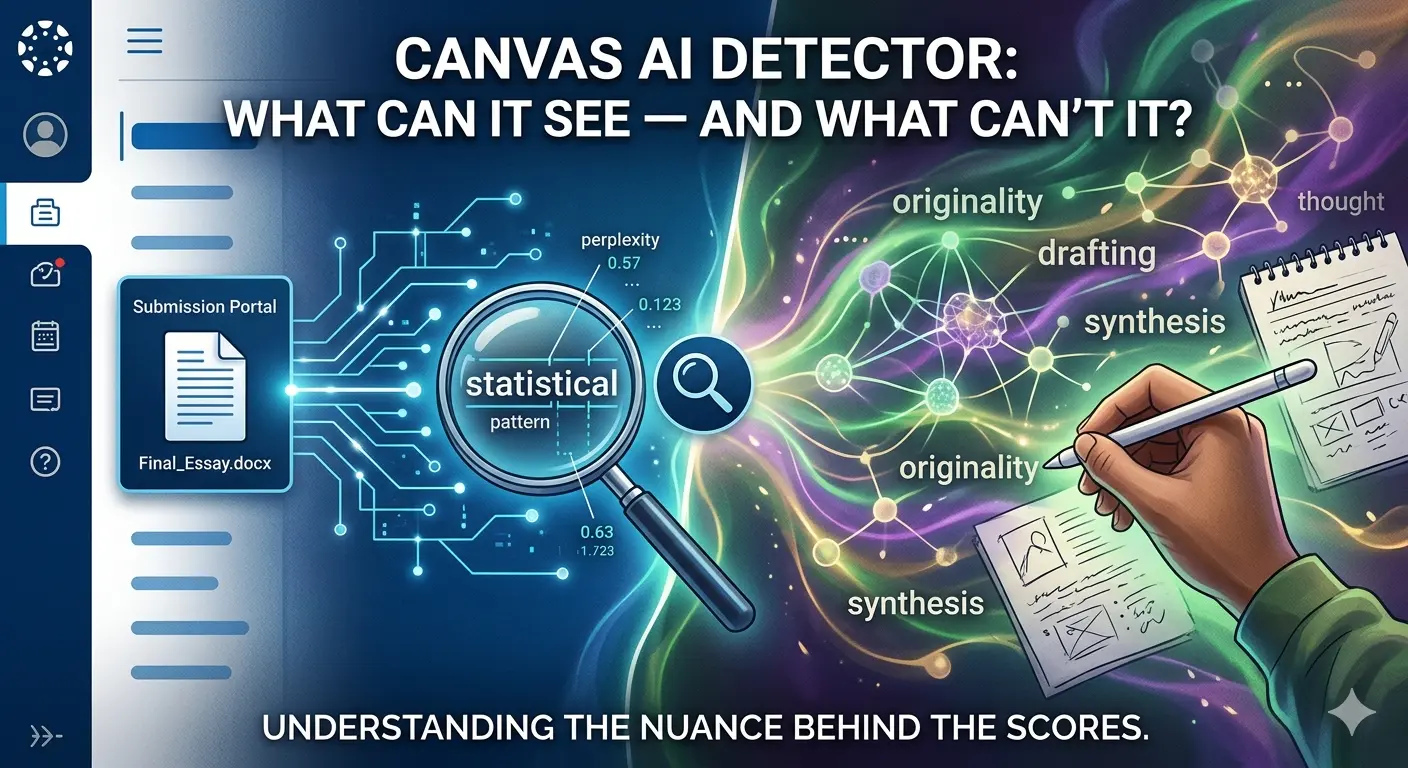
ai detector The Left Side (The Machine): Features a sleek, dark interface styled after a student submission portal. A magnifying glass hovers over a digital file labeled "Final_Essay.docx," analyzing it through glowing blue circuitry and data points like "statistical pattern" and "perplexity". The Right Side (The Human): Transitions into a vibrant, colorful explosion of organic shapes and neural-like connections. A human hand is shown actively writing on a notepad, surrounded by floating words such as "originality," "synthesis," "thought," and "drafting". Text Overlay: The main title is displayed at the top, with a subtitle at the bottom that reads: "UNDERSTANDING THE NUANCE BEHIND THE SCORES". ai detector
  • If you’ve ever submitted an assignment on Canvas and wondered whether your professor can tell you used AI — or even whether Canvas itself is silently watching — you’re not alone. It’s one of the most searched questions among students right now, and understandably so. The tools, the policies, and the stakes all feel murky. The answer, as it turns out, is more nuanced than a simple yes or no — and knowing exactly where the line is matters.

Key takeaways

  • Canvas has no built-in AI detection of its own
  • Detection only happens if your institution has installed a third-party tool like Turnitin
  • Canvas does log behavioral data — paste events, tab switches, and submission timing
  • AI detection tools carry meaningful false positive rates, especially for ESL students
  • A high AI score is a flag for human review, not automatic proof of wrongdoing

Can Canvas see if you use AI?

The short answer: Canvas itself cannot detect AI-generated writing. Canvas is a Learning Management System — a platform for organizing courses, submitting assignments, and communicating with instructors. It is not, at its core, an AI detection engine, and Instructure (the company behind Canvas) has not built any native AI-scanning capability into the platform.

What Canvas does do is log your behavior during submissions and timed quizzes. If you open an assignment and paste 1,500 words in under a minute, that event is recorded. If you switch browser tabs during an exam, Canvas logs exactly when you left and how long you were gone — though it cannot see what you were looking at on the other tab. These behavioral signals are visible to instructors in Canvas’s activity logs, independently of any AI detection tool your school may or may not use.

So to answer some of the most common questions directly: Canvas does not know when you have ChatGPT open in another window. It cannot read your clipboard. It cannot “track” whether an answer came from an AI model. But a submission pasted in seconds, combined with writing that looks nothing like your previous work, can absolutely draw an instructor’s attention — long before any automated tool gets involved.

What AI detector does Canvas use?

Canvas doesn’t use one by default — but your institution might. Through a system called LTI (Learning Tools Interoperability), schools can connect external AI detection tools directly into Canvas’s assignment workflow. Whether those tools are active on any given assignment depends entirely on what your school has paid for and what your instructor has switched on. There is no universal answer here — it varies from institution to institution, and sometimes course to course.

The most common tools connected to Canvas

Turnitin Most common

The most widely used tool at universities already on Canvas. It provides both a plagiarism similarity score and a separate AI writing score. Instructors see the AI report; students typically do not have direct access to it.

GPTZero

Built specifically to detect outputs from models like ChatGPT and GPT-4. Also available at institutional scale through Scaffold AI Detection, which can scan thousands of Canvas submissions at once without instructors having to check each one manually.

Copyleaks Low false-positive rate

Supports over 100 languages and has a notably lower false positive rate in multilingual testing. Several universities switched from Turnitin to Copyleaks in 2024–2025 specifically to reduce bias against international and ESL students.

Originality.ai

An AI-focused detector instructors can use independently — downloading submissions from Canvas and running them through the tool separately, even without a formal LTI integration in place.

If you’re unsure whether your school uses any of these tools, the most reliable place to check is your course syllabus or assignment instructions. Many institutions now disclose their use of AI detection software as part of their academic integrity policy.

Does Canvas use Turnitin for AI detection?

Only if your institution has set it up — and only on assignments where your instructor has enabled it. Turnitin is not active by default. It’s an add-on that universities pay for separately, and instructors must turn it on at the assignment level during course setup.

When it is active, Turnitin analyzes submitted text using a deep-learning model trained to recognize the statistical patterns that AI language models tend to produce: consistent sentence lengths, predictable vocabulary choices, and low variation in phrasing complexity. It produces two distinct outputs — a similarity percentage (how much of your text matches existing sources in Turnitin’s database of over 900 million documents) and an AI writing percentage (how likely the tool believes the text was machine-generated). These are separate scores, and one can be high while the other is low.

One important detail: students can see their similarity score after submission on most Canvas setups, but the AI writing score is visible only to instructors. If you want to know your AI score before submitting, you’d need to use a free tool like GPTZero to run a self-check independently.

How accurate is Canvas AI detection, really?

This is where the picture gets more complicated — and more important for students to understand clearly.

~98% Turnitin’s claimed accuracy on unedited AI text

61% ESL student essays misclassified as AI in a Stanford study

3–4% False positive rate for native English speakers

12+ Major universities that have disabled Turnitin AI detection

Turnitin claims close to 98% accuracy when detecting raw, unedited AI output. In practice, real-world conditions are considerably more complicated. Heavily polished, formal academic writing — exactly the kind students are expected to submit — can mimic the statistical patterns that AI detectors associate with machine-generated text.

The situation is particularly concerning for non-native English speakers. A Stanford University study found that AI detectors misclassified over 61% of essays written by non-native speakers as AI-generated, compared to a roughly 5% false positive rate for native speakers. The reason is structural: ESL writing tends to use simpler syntax, more predictable vocabulary, and shorter sentence variation — the same features detectors flag as signs of AI. Turnitin’s own researchers have acknowledged this bias publicly.

The accuracy picture is also less reliable on shorter submissions (under 300–500 words) and on text that has been substantially revised by a human after being generated. Some major universities — including Yale, Vanderbilt, and Johns Hopkins — have disabled Turnitin’s AI detection feature entirely, citing accuracy concerns and the risk of wrongful accusations against genuine students.

An AI detection score is not proof of cheating. Turnitin and most other tools explicitly state their scores are statistical indicators to be reviewed by a human instructor — not automatic verdicts. If you believe you’ve been falsely flagged, drafts, notes, and research materials showing your writing process are the most effective evidence to present.

What do the scores actually mean?

If your institution uses Turnitin inside Canvas, score thresholds vary by school and instructor — there is no single universal standard. Common informal benchmarks: below 20% is generally not a concern; 20–40% may prompt an instructor to take a closer look at the submission in context; above 40% is more likely to trigger a formal conversation. None of these percentages automatically mean anything on their own — they’re starting points for human review, not conclusions.

For the similarity score (plagiarism), a frequently cited informal threshold used at many institutions is 25%, though again this varies widely. A score of 25% or below on similarity is typically not flagged as problematic on its own, especially when the matching text consists of properly cited quotations or common academic phrases.

What Canvas cannot detect

To be precise about the platform’s actual limits: Canvas cannot see what other websites you have open, cannot read your clipboard before you paste, cannot access other applications running on your device, and has no way of knowing whether you discussed an assignment with an AI model verbally or used it only for brainstorming and outlining. Canvas also cannot detect AI use in oral presentations, in-class writing exercises, or any work that isn’t submitted digitally through the platform.

Even with Turnitin active on an assignment, AI text that has been substantially revised — not just synonym-swapped, but genuinely restructured, rewritten in a different voice, and integrated with original ideas — is significantly harder to detect. Detection accuracy on heavily edited text drops considerably from the headline figures vendors advertise.


The core takeaway is this: Canvas itself is not watching for AI. What it can do is log behavioral anomalies and route submissions to third-party tools your school may have installed. Whether those tools are running on a given assignment depends on your institution and your instructor. If they are running, their results are probabilistic — not definitive — and a human reviews them before any action is taken.

If you’ve been flagged and believe it’s a false positive, stay calm and gather your process evidence: earlier drafts, research notes, source materials. That paper trail is your strongest defense.

For questions about your school’s specific AI policy, the most reliable sources are your syllabus, your course’s assignment page, and your institution’s academic integrity documentation.

Does Canvas have its own built-in AI detector?

No. Canvas is a Learning Management System (LMS) used for organizing courses and submissions; it does not have native AI-scanning capabilities. Any AI detection occurs through third-party tools (like Turnitin or Copyleaks) that your school chooses to integrate.

Can my professor see if I have ChatGPT open in another tab?

No. Canvas cannot see which other websites you have open or what other applications are running on your device. However, it does log “tab switching” behavior during timed quizzes, noting when you leave the Canvas page and for how long.

What exactly can Canvas “see” when I submit an assignment?

While it can’t “read” AI, Canvas logs behavioral data, including:
Submission Timing: How long you spent on the page before submitting.
Paste Events: If a 1,500-word essay is pasted into a text box in a matter of seconds.
Activity Logs: Your navigation history within the Canvas site.

Which AI detection tools are most commonly used with Canvas?

Schools typically use “LTI integrations” to connect external tools. The most common are:
Turnitin: The most frequent integration; provides a “Similarity Score” and an “AI Writing Score.”
Copyleaks: Often preferred for its lower false-positive rate with multilingual students.
GPTZero: Specifically designed to flag GPT-generated outputs.

Can I see my AI detection score after I submit?

Usually not. While students can often see their Turnitin “Similarity Score” (for plagiarism), the “AI Writing Score” is typically visible only to the instructor. If you want to check your work beforehand, you should use a free external tool like GPTZero.