
How to Write an eBook in One Hour: The Ultimate AI Blueprint (Step-by-Step) 2026
Table of Contents
Write an eBook !! We have all had the dream. You are scrolling through Amazon or seeing a competitor’s post on LinkedIn, and you see it: they published another book. They are building authority, capturing leads, and making passive income while they sleep.
And then there is you. You have the expertise. You have the stories. You probably have a dozen half-started drafts sitting in a folder on your desktop labeled “Book Ideas.”
But then reality hits. You sit down to write, and the cursor just blinks. The coffee you poured twenty minutes ago is now cold. The sheer mountain of writing 2,000 or 5,000 words feels impossible to climb when you have a full-time job, a family, and a life. So, you close the laptop. “I’ll do it when I have more time,” you tell yourself.
But we both know “more time” never comes.
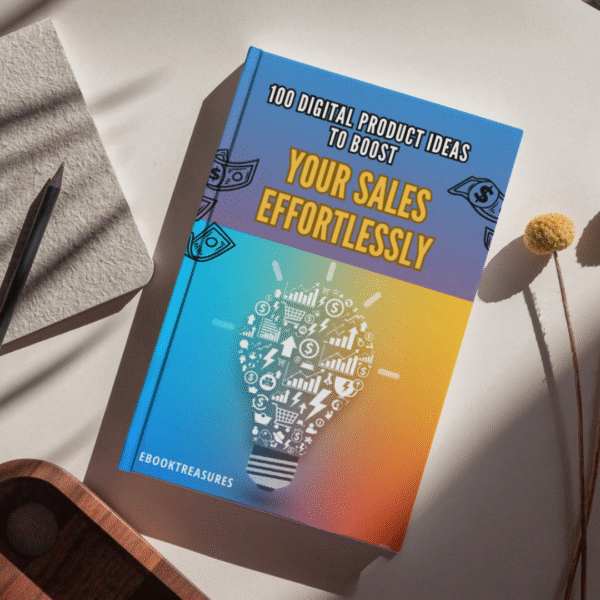
100 Digital Product Ideas to Boost Your Sales Effortlessly
Feeling stuck in the “idea phase”? 🤔 Turn your creative passion into profit with this ultimate list of digital product ideas!
This guide is your secret weapon to finally stop brainstorming and start selling. 🚀
Here is the good news: the rules have changed. The barrier to entry has crumbled. Today, you don’t need a cabin in the woods and six months of solitude to become an author. You need a solid idea, an internet connection, and about sixty minutes.
This isn’t about cheating. It isn’t about letting a robot churn out garbage. It is about using technology to bypass the resistance that keeps you silent. Today, we are going to walk through exactly how to write an eBook in one hour using AI, transforming you from an “aspiring writer” to a published authority figure before lunch.
Why You Should Write an eBook with AI Today
You might be hesitating. Is this “real” writing? Is it cheating? Let’s reframe that. If you hire a ghostwriter, is that cheating? CEOs and politicians do it every day. AI is simply the most affordable, fastest ghostwriter you will ever hire.
Speed is the New Currency
In the digital economy, speed matters. While traditional authors spend years perfecting a manuscript, digital creators are publishing weekly. By the time the perfectionist releases one book, the AI-assisted creator has released ten, gathered feedback, and built a massive email list.
Crushing the Blank Page
The hardest part of writing isn’t editing; it’s creating the first draft. AI eliminates the “blank page syndrome.” It gives you clay to mold. It is infinitely easier to fix a mediocre page of text than to fill an empty one.
The Market is Waiting
The e-learning and digital product market is exploding. People are hungry for specific, actionable information. They don’t want a 300-page memoir; they want a 2,000-word solution to their problem. If you can solve that problem, they will pay you for it.
The “Prompt Recipe” for AI Success
Most people fail at writing with AI because they treat it like a search engine. They type, “Write a book about gardening,” and get a generic, robotic mess.
To get high-quality output, you need to think like a chef. You need a recipe. If you leave out the salt, the bread tastes like cardboard. If you leave out the context in a prompt, the writing sounds like… well, a robot.
Below is the ingredient list you must include in every single prompt you feed the AI to ensure the output sounds like you.
| Ingredient | Amount/Type | Purpose |
| Role/Persona | 1 Expert Persona | Tells the AI who to be (e.g., “Act as a Senior Marketing Strategist with 10 years of experience”). |
| Topic | 1 Specific Niche | Keeps the content laser-focused (e.g., “Affiliate Marketing for Busy Moms,” not just “Marketing”). |
| Word Count | ~500 Words per section | Defines the scope. AI struggles to write 2,000 words at once; break it down. |
| Format | Structured (H1, H2, Bullets) | Ensures readability so you don’t get a wall of text. |
| Tone | Engaging & Direct | Prevents the AI from using fluffy, academic language. |

Table: The AI eBook Ingredient List
Step 1: The “Skeleton” Strategy (5 Minutes)
Do not start writing yet. If you start generating text without a map, you will end up with a wandering, repetitive mess. You need a skeleton.
Your goal in the first 5 minutes is to get a rock-solid outline that covers the “Reader’s Journey.” Where are they starting (pain point), and where do they end (solution)?
Copy and paste this prompt into ChatGPT or Claude:
“Act as an expert book editor. I want to write a short, actionable eBook (approx. 2,000 words) about [INSERT YOUR TOPIC]. The target audience is [INSERT AUDIENCE] who are struggling with [PAIN POINT].
Please create a detailed 5-chapter outline.
- Chapter 1: The Hook/Problem.
- Chapters 2-4: The Actionable Steps/Solution.
- Chapter 5: Conclusion and Call to Action.
Under each chapter title, list 3 bullet points of exactly what needs to be covered. Keep the titles catchy and benefit-driven.”
The Human Check:
Once the AI generates the outline, spend two minutes tweaking it. Does Chapter 3 make sense? Is the order logical? If not, tell the AI: “Swap Chapter 2 and 3, and make Chapter 4 more focused on beginner tips.”
Step 2: The “Chunking” Method (45 Minutes)
Here is the secret sauce. The biggest mistake rookies make is asking the AI: “Write the whole book now based on this outline.”
If you do that, you will get a 600-word summary that glazes over the details. To get a 2,000-word eBook that actually provides value, you must use the Chunking Method. You are going to write one chapter at a time.
Generating Chapter 1: The Hook
You need to grab the reader by the throat (metaphorically) in the first paragraph.
- The Prompt: “Great. Now, write Chapter 1 in full. Use a storytelling tone. Start with a relatable scenario that illustrates the reader’s pain point. Use short sentences and avoid academic jargon. Aim for 400 words.”
Generating the “Meat” (Chapters 2-4)
This is where the value lives. These chapters need to be instructional. You want actionable steps, not fluff.
- The Prompt: “Now write Chapter 2. This is a ‘How-To’ chapter. Use a clear, instructional tone. Include a numbered list of steps the reader should take. Use bold text for key terms. Aim for 500 words.”
Repeat this process for Chapter 3 and 4, tweaking the prompt slightly if you need a specific format (like a checklist or a case study).
Generating the Conclusion
Don’t just fade to black. Your conclusion is your sales pitch. It’s where you tell them what to do next.
- The Prompt: “Write Chapter 5. Summarize the key takeaways in a bulleted list. Then, transition into a strong Call to Action encouraging them to [INSERT YOUR GOAL: e.g., sign up for my newsletter / buy my course]. make it empowering and high-energy.”
Step 3: The Human Polish (10 Minutes)
At this point, you have about 2,000 words of raw text. It took you roughly 45 minutes. But you aren’t done.
If you publish this raw, it will read like a Wikipedia entry. It will lack soul. You now need to switch hats from “Manager” to “Editor.”
Scan through your document and look for the “AI Tells.” These are words that AI loves but humans rarely use in casual conversation.
The “Banned Word” List:
- “In the digital landscape…”
- “Delve into…”
- “Unlock your potential…”
- “A tapestry of…”
- “In conclusion…”
Delete these. Replace them with how you actually talk.
- Instead of “Let us delve into the nuances of…” write “Let’s look at…”
- Instead of “In the fast-paced digital landscape…” write “Online, things move fast.”
Fact-Checking:
AI is a creative writer, not a fact-checker. If your book mentions a specific statistic (e.g., “80% of businesses fail”), verify it. AI effectively “hallucinates” data to make a point stronger. Never publish a number you haven’t Googled yourself.
Tools You Need to Write an eBook Fast
You don’t need expensive software. You likely have everything you need already.
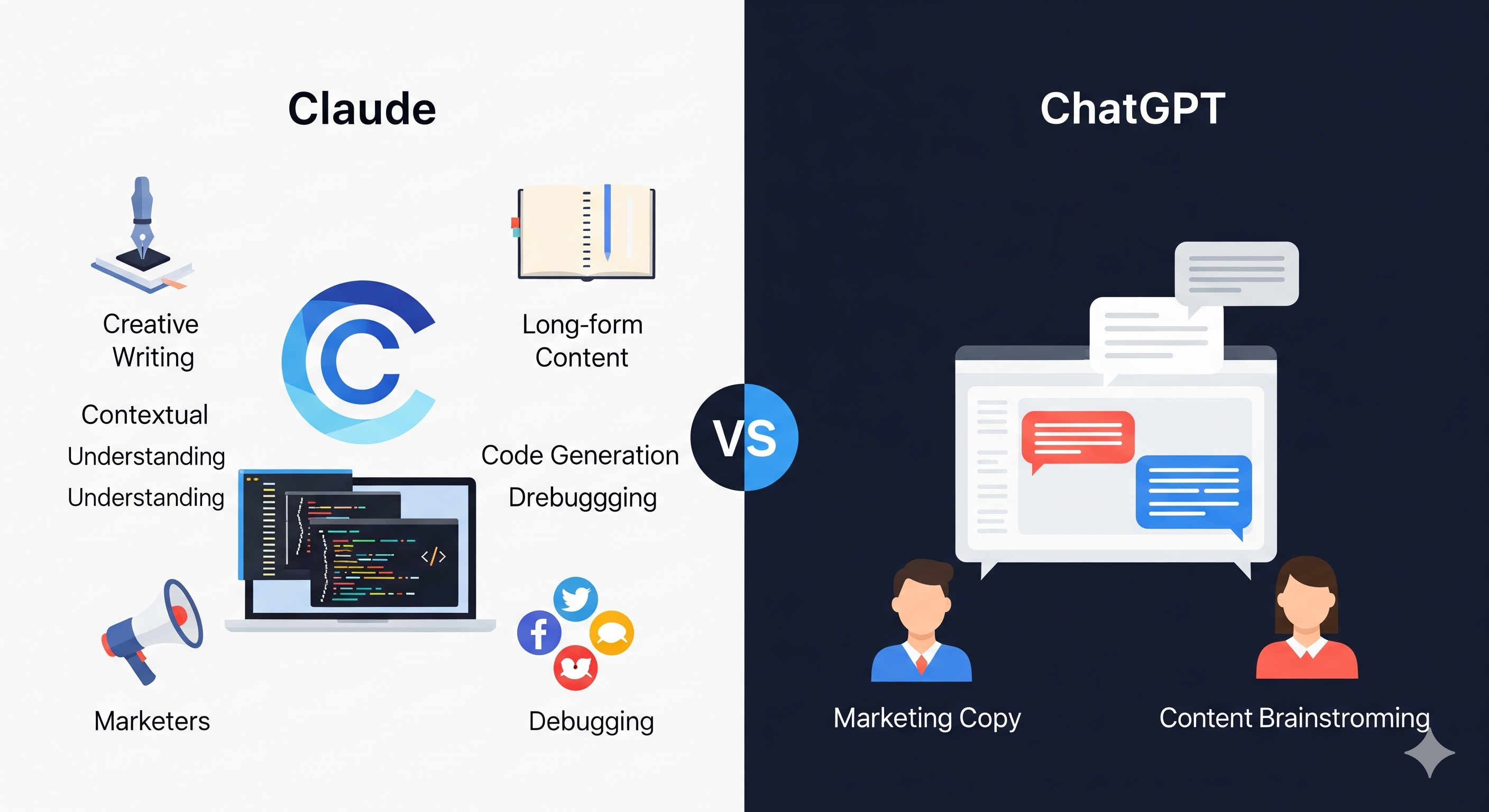
- ChatGPT (Plus) or Claude 3.5 Sonnet: These are currently the gold standard for long-form writing. Claude has a larger “context window,” meaning it remembers earlier chapters better than the free version of ChatGPT.
- Google Docs / Microsoft Word: For compiling your text. Use the “Voice Typing” feature if you want to dictate some personal anecdotes to mix in with the AI text.
- Canva: You need a cover. Go to Canva, search “eBook Cover,” pick a template, and change the text. Do not spend more than 10 minutes on this.
- Grammarly: AI makes grammatical mistakes too. Run your final draft through Grammarly to catch any weird phrasing or commas in the wrong places.
Frequently Asked Questions (FAQ)
You might still have a few questions about the ethics and logistics of this process. Let’s answer them.
Q: Can I legally sell an eBook written by AI?
A: Generally, yes. In the US and most regions, you can sell content generated by AI. However, you cannot copyright the AI-generated text itself (meaning you can’t sue someone for copying it). If you edit it significantly (Step 3), it becomes a human-AI collaboration, which is safer. Note: Always check the Terms of Service of the specific AI tool you use.
Q: Will the content sound robotic if I write an eBook with AI?
A: It will only sound robotic if you skip Step 3: The Human Polish. AI is a tool for drafting, not for final publishing. Your unique voice comes from the editing process and the specific anecdotes you add.
Q: Can AI really write 2,000 words in one hour?
A: Absolutely. The actual text generation takes seconds. If you have your outline ready (Step 1), the AI can generate 500 words in about 30 seconds. The “hour” timeline includes your prompting, reading, and refining time.
Q: What is the best AI tool to write an eBook?
A: Right now, Claude 3.5 Sonnet is widely considered the best for writing because it sounds more natural and human-like than GPT-4. However, ChatGPT is excellent for brainstorming the outline and chapter ideas.
Conclusion
The era of the “tortured artist” is over. You do not need to suffer to create value. You do not need to lock yourself away for months to become an author.
The only thing standing between you and a finished product—a product that can generate leads, build trust, and make sales—is one hour of focused work. You have the blueprint. You have the “Ingredient Recipe.” You have the strategy.
So, here is your challenge: Don’t just bookmark this article. Don’t save it for “someday.” Open a new tab right now. Open your AI tool of choice. Copy the prompt from Step 1, and hit enter.
By this time next hour, you could be an author.
Ready to start? Copy the prompt below and generate your outline now.
FOR SEO :
Write an eBook, Write an eBook, Write an eBook, Write an eBook, Write an eBook, Write an eBook, Write an eBook, Write an eBook, Write an eBook, Write an eBook, Write an eBook, Write an eBook, Write an eBook, Write an eBook,