Ebooks Are Thriving in 2026: My Winning Strategy
Table of Contents
You know the feeling. It usually hits you on a Sunday evening, or maybe the first of the month when you check your bank notification feed. You scroll down the list of transactions, and it’s a death by a thousand cuts. $14.99 for a streaming service you haven’t opened in weeks. $9.99 for a music app. $5.00 for a newsletter you meant to read but archived instead. $29.99 for software you used once for a specific project.
It’s called subscription fatigue, and if you are feeling it, you are not alone.
For the better part of a decade, we were told that “access” was better than “ownership.” We were sold the idea that renting our digital lives was convenient. But as we head into 2026, the wind is shifting. You are starting to realize that renting everything means you own nothing. You are tired of the monthly bleed. You are tired of price hikes for services that remove content without warning.
This collective exhaustion is fueling a quiet revolution: The return of the Ebook.
But this isn’t the Kindle Gold Rush of 2012. The landscape for ebooks in 2026 is different, smarter, and more profitable for creators who understand the shift. This year isn’t about churning out cheap content; it’s about digital sovereignty. It’s about paying once, keeping it forever, and solving specific problems without a login screen.
If you have been thinking about creating a digital product, or if you are just looking for a way to escape the subscription trap yourself, this is your wake-up call. Here is why ebooks are reclaiming the throne, and exactly how I position and sell mine in this new economy.
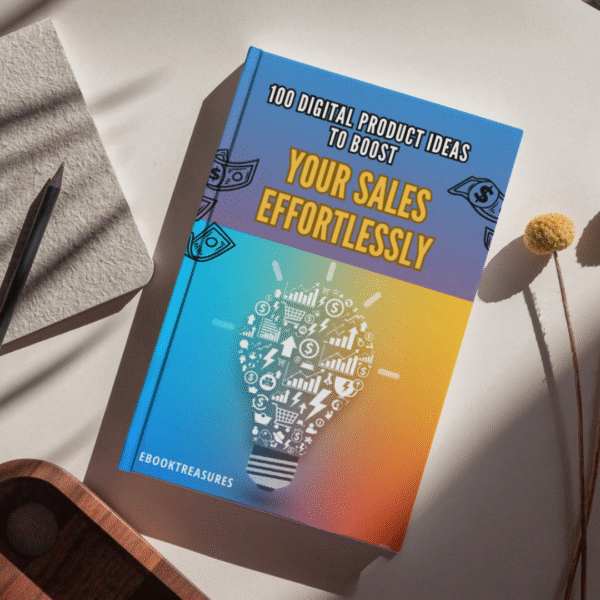
100 Digital Product Ideas to Boost Your Sales Effortlessly
Feeling stuck in the “idea phase”? 🤔 Turn your creative passion into profit with this ultimate list of digital product ideas!
This guide is your secret weapon to finally stop brainstorming and start selling. 🚀
The “Great Unsubscribing”: Why 2026 is the Year of the Ebook
To understand why ebooks are making such a massive comeback, you have to look at the consumer psychology of 2026.
We have reached a saturation point. The average household is now juggling more subscriptions than they can keep track of, and the value proposition is crumbling. When every app, tool, and creator wants a monthly fee, the consumer’s natural reaction is to retreat. You are likely becoming more selective. You are cancelling the “nice-to-haves” and keeping only the “need-to-haves.”
The Craving for Ownership
In this climate, the one-time purchase has become a luxury feature. When you buy an ebook, you make a single transaction. There is no looming charge next month. That psychological safety is incredibly attractive right now. You pay $20, you get the file, and it lives on your device forever. It is yours. No server shutdowns can take it away from you.
The “Offline” Movement
There is another layer to this: the desire to disconnect. We are seeing a massive surge in “dumb phone” usage and offline hobbies. Ebooks—especially when read on dedicated e-ink devices—offer a way to learn and consume content without the distraction of notifications.
When you buy a subscription to an online course, you are often forced to log into a platform designed to distract you. When you buy a PDF or ePub file, you can take it to the park, turn off your Wi-Fi, and actually focus. As a creator, if you can package your knowledge into a format that respects the buyer’s desire for peace and ownership, you are already winning.
Niche is the New Viral: What Readers Are Actually Buying
So, the market is hungry for ownership. But what are they actually buying?
If you are planning to write “How to Get Rich” or a generic “Guide to Fitness,” stop. The 2026 market is allergic to generic advice. AI can generate generic advice in seconds for free. Why would anyone pay you for it?
The ebooks that are selling right now are hyper-specific. They address “micro-problems” or “micro-hobbies” that AI is too broad to handle effectively with human nuance.
The Shift to “Micro-Mastery”
You need to drill down. Instead of a book on “Gardening,” successful sellers are releasing guides on “High-Yield Urban Gardening for North-Facing Balconies.” Instead of “Negotiation Skills,” they are selling “Scripted Responses for Freelance Graphic Designers Dealing with Scope Creep.”
Here are the hot niches I am seeing dominate in 2026:
- AI-Proof Soft Skills: As automation takes over technical tasks, you are seeing a high demand for books on human-centric skills: emotional intelligence, conflict resolution, and community building.
- Digital Detox & Analog Living: Ironically, people are buying digital books on how to live less digital lives. Guides on woodworking, film photography, and bread-making are exploding.
- Specialized Health & Diet: Not generic weight loss, but very specific protocol-based guides (e.g., “The histamine-intolerance cookbook for busy parents”).
The key is to solve a specific pain point so effectively that the purchase feels like a no-brainer. If you can save someone ten hours of Googling or $500 in mistakes, a $25 ebook is a steal.
The “Secret Sauce” Recipe for a Best-Selling Ebook
You might think that writing an ebook requires you to be the next Hemingway. That is a myth that holds too many people back. Non-fiction ebooks are not literature; they are solutions.
When I plan a new product, I don’t treat it like writing a novel. I treat it like cooking a meal. It needs specific ingredients to work. If you leave one out, the result is bland. If you get the ratios right, customers will come back for seconds.
Here is the exact formula I use for every launch to ensure the product resonates with the 2026 buyer.
The Best-Seller Formula
| Ingredient | Quantity | Why It Matters |
| Urgent Pain Point | 1 Major Problem | People do not pay for “information” anymore; information is free. They pay to make a specific pain go away. If your book doesn’t solve a burning problem, it’s just a nice-to-have. |
| Personal Experience | 2 Cups | This is your competitive advantage against AI. ChatGPT can list facts, but it cannot share your story of failure and redemption. Your scars are your credibility. |
| Scannable Formatting | Generous Dash | Nobody reads walls of text on a screen. Use H2s, H3s, bullet points, and bold text liberally. Design for the scanner, not the scholar. |
| Bonus Resources | 1-2 Items | A checklist, a spreadsheet, or a template included with the download increases the “perceived value” instantly. It turns a “book” into a “toolkit.” |
| Killer Title | 1 (Optimized) | If they don’t click, they don’t buy. Your title must promise a benefit, not just describe the topic. |
How I Sell Mine: A Simple Strategy That Works
Writing the book is only 20% of the work. The other 80% is getting it into the hands of the people who need it.
You might be dreading the idea of marketing. You picture yourself doing silly dances on TikTok or spamming your friends on Facebook. Let me stop you there. That is the old way. In 2026, the most effective way to sell ebooks is through passive trust, not active noise.
Here is the breakdown of the strategy I use to sell my ebooks on autopilot.
1. The “Freebie” Bridge
You cannot walk up to a stranger and ask for money. You have to buy them a drink first. In the digital world, this is your “Lead Magnet.”
I never ask for a sale immediately. Instead, I offer a free “slice” of the value. If my ebook is about “Urban Gardening,” my freebie might be a one-page PDF: “The Top 5 Plants That Won’t Die on Your Balcony.”
When you offer this for free in exchange for an email address, you do two things:
- You filter for interest: Only people actually interested in gardening will download it.
- You build trust: If your free stuff is good, they assume your paid stuff is amazing.
2. SEO Over Social Media (The Long Game)
Social media is a hamster wheel. You post today, and it’s gone tomorrow. I prefer to build assets that work for me while I sleep.
This is why I focus on SEO (Search Engine Optimization). I write blog posts—just like the one you are reading right now—that target the specific questions my potential customers are asking Google.
If someone searches “How to grow tomatoes in pots,” I want them to find my article. In that article, I give them great free advice, and then I gently mention: “If you want the full step-by-step system, check out my comprehensive guide.”
This traffic is high-intent. They were already looking for a solution. I didn’t have to interrupt their scrolling; I just answered their question.
3. The Power of Bundling
Here is a secret to doubling your revenue without doubling your customers: Bundling.
A $20 ebook is a great entry point. But many of your customers are “super-buyers.” They want the premium experience. So, I always offer a higher-tier version.
- Tier 1 ($20): The Ebook (PDF/ePub).
- Tier 2 ($45): The Ebook + Audiobook version (read by me) + A printable workbook + A database of resources.
You will be shocked at how many people opt for Tier 2. It increases your “Average Order Value” significantly, and it serves the customer better by giving them different ways to consume the content.
The Tech Stack You Need (Keep It Simple)
One of the biggest hurdles you face is probably the tech. You think you need a fancy website, a complex shopping cart, and a degree in coding.
You don’t. In fact, complexity is the enemy of execution. In 2026, the tools for selling digital products are incredibly streamlined.
Writing
- Google Docs or Notion: You don’t need Scrivener. Just write. Export as a PDF. Done.
Design
- Canva: This is non-negotiable. Use it to design your cover (make it look professional!) and to lay out the interior pages. They have thousands of “Ebook” templates.
Selling
- Gumroad or Lemon Squeezy: These are my go-to platforms. They handle the payments, the file delivery, and the taxes. You just upload your file, set a price, and get a link.
- Shopify: If you plan on building a larger brand with multiple products, Shopify is great, but for your first ebook, keep it simple.
FAQ: Common Questions About Selling Ebooks
I hear the same questions all the time from people who are hesitant to start. Let’s address the elephant in the room.
Q: Is the ebook market actually growing?
A: Yes. While the broader publishing industry has its ups and downs, the independent creator economy is thriving. As mentioned earlier, subscription fatigue is driving people back to one-off purchases. They want to own their library.
Q: Do I need to be an expert writer?
A: No. You need to be a clear communicator. People are not buying your book for your prose; they are buying it for your process. If you can explain how to get from Point A to Point B clearly, you are a good enough writer.
Q: How long should my ebook be?
A: Length does not equal value. Do not fluff it up. A 30-page guide that solves a painful, expensive problem is worth infinitely more than a 300-page book that meanders. Respect your reader’s time.
Q: Can I use AI to write my ebook?
A: You can use AI for outlining, brainstorming, and research. But please, write the voice yourself. In 2026, readers are sophisticated. They can smell “ChatGPT syntax” from a mile away. If your book feels robotic, you will lose trust, and you will never get a repeat customer.
Conclusion: The Best Time to Start Was Yesterday
The digital landscape is shifting under our feet. The era of mindless subscriptions is waning, and the era of intentional ownership is returning. This is good news for you.
It means you don’t need millions of followers to make a living. You don’t need to feed the content algorithm every single day. You just need to package your knowledge into a helpful, tangible asset that people can own.
You have experiences, skills, and solutions inside you right now that others are desperately Googling for. They are willing to pay for the shortcut you can provide. The only thing standing between you and a new income stream is the decision to start writing.
Don’t let another year of “renting” your life go by. Take control.